Staff Sharing

Donate Now!

Sharing Love

(Chinese Only)彼此激勵 成就突破

(Chinese Only)彼此激勵 成就突破

保良局安老服務團隊致力推廣長者保健的理念,定期舉辦不同類型的運動訓練班,更於2003 年起推行長者健身訓練計劃,以鼓勵長者培養運動習慣,邁向健康晚年生活。   以人為本 從心出發   與成年人不同,長者在健身前需接受更嚴謹的評估。體適能教練會先了解他們的健康狀況,如患病記錄、服藥情況等,並按長者的運動習慣及目標,度身制定合適的健身計劃,例如︰避免讓關節出現嚴重退化的長者進行高強度及高負重的運動,以免傷勢惡化。然而,健身計劃不單只考慮了長者的身體狀況,保良局方譚遠良健樂中心主任—— 黎志榮(右圖)坦言更要照顧每位長者的心理狀況︰「並非所有長者都熱愛運動,特別當訓練未見成效會容易洩氣,所以我們更要想辦法提高長者的運動動機,例如除了讓長者接受器械訓練以外,鼓勵他們參與群體運動,與其他長者一同做毛巾操、跳健身舞等,讓快樂激發他們多做運動。」 助人自助 感染快樂   長者做運動所得到的成效雖然比年輕人慢,但持之以恆地堅持終會有所成效。黎sir 表示教練團隊最高興的莫過於是見證長者由「做不到」變成「做到」,想到多年前的一個成功個案,更是他一直堅持的動力,「婆婆起初因為膝關節退化而要以輪椅出入。經過訓練後,她逐漸可以以三腳架代步,甚至現在只需用拐杖便行了。」   也許運動點燃的不單只是長者的活力,他們轉變所帶來的喜悅,更是一直在點燃團隊服務的初衷。
The General Attendants of the Po Leung Kuk Kindergarten-cum-Nursery - Auntie Fan and Auntie Kwan

The General Attendants of the Po Leung Kuk Kindergarten-cum-Nursery - Auntie Fan and Auntie Kwan

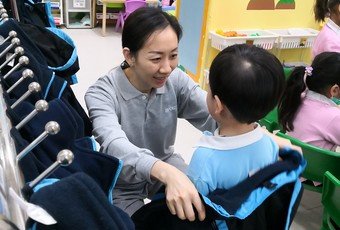
Who is the most unforgettable person in your few years of kindergarten life? Teachers? Classmates? Or if you can remember, the General Attendants who made relentless effort to prepare your diets and clean up the kindergarten premises?    The work of Auntie Fan and Auntie Kwan, the General Attendants of the Po Leung Kuk Kindergarten cum Nursery, is just like any other attendants with the same duties, they are always the earliest staff arriving the school. Before lesson starts, they need to clean up all classrooms and teaching aids to ensure everything the toddlers touch are clean. After students coming back to school, they need to assist the chef in making refreshments, take the kids to toilets, as well as get the children to sleep and cover them with blankets during nap time. Auntie Fan and Auntie Kwan both joke about their roles are just like the kids’ mothers.     Full-time kindergarten students need to spend almost whole day at school. Therefore, their development and growth greatly rely on school education, in which General Attendants can fill in the gaps to the tasks that teachers do not have time to manage, such as leading the students through toilet training, tutoring them how to use chopsticks or washing hands. All the trivial tasks performed by the General Attendants create a more comfortable learning environment for the children.       Even though the work is busy, Auntie Fan and Auntie Kwan are still satisfied with their jobs. It is because witnessing children’s growth is a beautiful thing for them.   
Sum Miu, Welfare worker

Sum Miu, Welfare worker

Comprehensive residential care services bring colors to children’s life. “Why do the children need to be suffered at such a young age? Every child deserves proper care.”  Po Leung Kuk offers a variety of residential care services to children with family difficulties. One of them is the “New Comers’ Ward” at the Headquarters, which is the only gazetted place of refuge in Hong Kong providing urgent and short-term residential care for children who are under family crisis. It is common that children would feel nervous and anxious when they entered the new environment. The support and companionship of our frontline caregivers are therefore important to create the warmest shelter for the children.  Sum Miu is one of the welfare workers who has been working in the Ward for 3 years already. She has looked after more than 300 children with inadequate family care due to sudden family crises, divorce /decease /imprisonment / hospitalisation of parents, or child abuse. “Sometimes police rang the doorbell at 2 or 3am and brought the kids around. The top priority at that time is to prepare sufficient food and bed to meet the children’s physical needs.”  Emotional support is another crucial duty of the staff. Sum Miu pointed that the Ward has set up the “Golden 2 Hours” system. Each new-coming child will receive exclusive child care by a specific staff as their ‘Buddy’, who will answer their concern for living in the Ward so as to soothe their anxiety.   Emotional and behavioral problems are often found in the Ward’s children with complicated family background. It requires substantial effort to open up their hearts and educate them. “Patience is the key. For instance, if they were in temper, we will teach them to clench their fists, stand aside and try to calm down. Afterwards we will explain the reason to them and solve the problems step-by-step. I hope the children can leave with the knowledge learnt from the Kuk and develop the proper attitude to get along with people.”
Cheung Sir

Cheung Sir

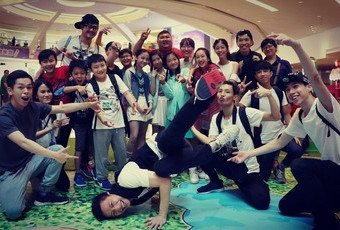
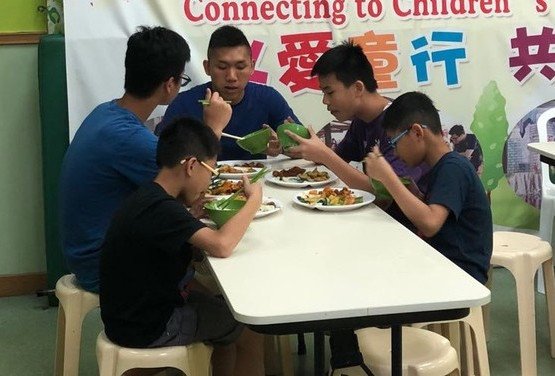
  25 is simply the golden age of everything, some people work hard for their career, while some people are getting prepared to form their own families. But for the 25-year-old Cheung Ka Fai, he is already the “dad” of 14 boys. This Cheung Ka Fai is not the renowned actor we see on screen. He, dubbed as “Cheung Sir”, holds a Master of Social Work and is the “parent” of the Po Leung Kuk’s dormitory in Children Section, responsible for taking care of 14 “sons” regularly.      Cheung Sir needs to take care of 14 boys aged between 6 and 18 living in one of the Kuk’s dormitory. Every day, Cheung Sir the “dad” needs to wake up his sons for school, ask them to brush up and get dressed, make them breakfasts, tidy up, pick them up after school and teach them homework. But his role is not only limited to “dad”, when he got along with children in secondary schools, he treats himself like their “brother”, who can chit chat and joke around with them, or confide in each other, and built up their relationship in a comparatively casual way. Cheung Sir is also like a “tutor” in after-school care class, guiding them to study and finish their homework in the self-study periods. During weekends, he then turned himself into “fitness coach” to train up their physique and supervise them to do more exercise.    Being the parent of the dormitories need to work long hours, but the wish of spending more time with the new generations has triggered Cheung Sir to move from a student discipline teacher in secondary school to the big family of Po Leung Kuk. Children living in the dormitories cannot receive adequate cared for by their families due to various family problems, and often lack father’s care during their growth. Therefore, Cheung Sir hopes to give them care and love by the identity as a “dad”. He also mentioned that each child has a unique background underlying different family issues, it is necessary to adopt different tailor-made approaches to get along with each child, so as to establish relationships with them, gain their trust and give them a sense of security; but at the same time need to ensure everyone is being treated equally, in order to let them realise the common standard in dealing with serious problems.   Helping the children to understand themselves, explore their dreams, discover their ways of life, and among all to learn to be a good boy, are all the meanings for him to be a “dad”.